We don't push a stack. We pick what fits your runway.

Every agency has a favourite framework. We have your hiring market, your cloud bill, your team's existing skills and your deadline. The right stack is the boring one that survives the next hire - and we'll write down why we chose it before we write a line of code.

The five questions we ask first

A stack is a 10-year decision. We treat it like one.

We don’t just recommend technologies - we evaluate how they’ll perform, scale, and adapt over the next decade. Every decision is made with long-term stability, team sustainability, delivery speed, and future innovation in mind. Our process helps businesses avoid costly rebuilds, reduce technical debt, and choose a stack that grows with their vision.

  • 01

    Who hires next?

    The cheapest framework is worthless if your next senior dev quits in month 9. We pick for your local talent pool.
  • 02

    What's the 5-yr cost?

    Licenses, hosting, hiring premium. Sometimes "free" Drupal costs 3× a paid Shopify. We model it.
  • 03

    How does it die?

    Every framework has an end. We document the migration path before we start, not when you're stuck.
  • 04

    What ships in 12 weeks?

    We pick stacks where the 80% of your product is already a library. The novel work goes into the 20%.
  • 05

    Where does AI plug in?

    If you'll add LLMs in 18 months, today's stack needs the seams. We don't rebuild - we leave room.
By role · what we hand back

Different people, different artifacts.

A CTO wants a runbook. A founder wants a demo. We deliver both.

Engineering leaders

You'll get a stack you can audit on day 1.

  • Tech Decision MemoWhy we chose this stack, what we rejected, what the 5-year cost looks like.
  • Runbook + IaCTerraform/Pulumi from day one. Every env reproducible in <30 min.
  • Observability baselineLogs, traces, alerts, SLOs. Sentry / Datadog / OpenTelemetry pre-wired.
  • Migration paths documentedWhere the framework dies and how to leave. Honest.
audit your stack
img
Product managers

You'll get a velocity number you can put in a roadmap.

  • Sprint cadence2-week sprints, demo each Friday, fixed scope. You always know what's next.
  • Public Linear / JiraYour team sees every ticket, every estimate, every comment.
  • Feature flags + A/BLaunchDarkly / GrowthBook on every project. Ship dark, release bright.
  • Analytics & eventsEvent schema reviewed before any feature ships. PostHog / Mixpanel / Amplitude.
see a sample sprint
img
Founders

You'll get something to demo on Monday.

  • Working prototype in 2 weeksNot Figma. A clickable app you can show to a customer.
  • Fixed-price MVP optionScope locked, price locked, deadline locked. 8–12 weeks.
  • Stack that survives Series AWe pick what a US/EU engineering hire will actually want to work on.
  • Investor-ready readmeArchitecture diagram + cost model + roadmap, in one PDF.
ship in 8 weeks
img
Procurement & finance

You'll get one invoice and zero surprises.

  • Fixed-price or T&M, your callWe've written 500+ SoWs. We don't hide change-orders in the fine print.
  • 5-year TCO modelHosting, licenses, hiring premium, migration cost. The numbers your CFO needs.
  • MSA + DPA standardSOC 2, ISO 27001, GDPR, HIPAA paperwork ready before kickoff.
  • Single SPOC, single rate cardOne delivery lead, one number to call. No "let me check with the bench".
request paperwork bundle
img
Honest defaults

What we'll talk you out of.

A good agency tells you when not to spend money. Here's where we push back.

You asked for What we'll probably suggest instead Why
Microservices on day one A well-structured modular monolith You don't have the team to operate 12 services. Split when you have a real reason - usually around year 2.
Native iOS & native Android React Native or Flutter Two codebases is two teams. Unless you need a hardware API on launch day, cross-platform is right.
A custom CMS WordPress, Sanity, or Strapi Your editorial workflow isn't that special. Custom CMSes are where projects die. We'll prove it can fit.
Kubernetes from day one ECS, Cloud Run, or Render K8s costs you a half-time SRE. Most products under $5M ARR don't earn that ops tax.
Build your own AI model Fine-tune an open-weight model, or use the API The model is rarely the moat. Your data, your distribution and your UX are.
Just use Webflow Next.js + Sanity (often) Webflow is great until you need a real product. Migrations off it are painful - we've done seven.
Word of mouth

What clients tell their peers.

Real names, real companies, real numbers. Video on the left, written notes on the right - choose whichever feels more honest.

trieval

"They feel like our team — not a vendor."

RH
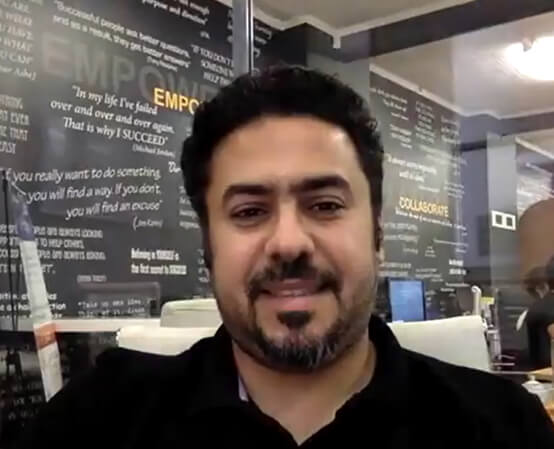
Ismail Abualsmah
CEO, Trieval
01:18
Repeat client
Although regulations prevented the site's launch, it met all requirements in terms of form and function. Fullestop's project plan charted a clear course to completion. The team's flexible, diverse talent pool enabled them to manage each stage of the project with consistent levels of skill.
Fast turnaround
Weekly demos, no surprises, and they push back when we're wrong. That last part is rare. Cut our cloud bill 47% in the first audit.

News & insights

Check Out the Latest Trends and Tech Discussions

We constantly come up with top-tier resources and breathtaking ideas that would help you stay informed about
the latest happenings in the tech world.

Website Redesign...

After enjoying an amazing New Year, it’s now time to get out of holiday hangover and to look at your website. Every new year comes with new op...

Read More Arrow

The Psychology of Web Design: Creating Websites Th...

All these technologies were built to make the user experience smooth and streamlined but as the technology advances and become complex the user al...

Read More Arrow

What Is Agentic Automation? How It’s Transformin...

In today’s fast-evolving digital landscape, enterprises are constantly seeking smarter ways to optimize workflows, reduce costs, and accelerate inno...

Read More Arrow

Top Flutter App Development Trends in 2025...

Mobile applications have become indispensable, streamlining everything from daily chores to complex business operations. In this fast-paced digital la...

Read More Arrow

Integrating E-Commerce in Beauty Apps: Boosting Sa...

The beauty industry is at the forefront of a digital revolution, with mobile applications reshaping how brands connect with consumers and drive revenu...

Read More Arrow

Hadoop Vs Conventional Databases – Which One to ...

For businesses wanting to know which features will better assist their big data requirements, below are a few important questions that should be ask...

Read More Arrow
Frequently Asked Questions

The questions every founder asks us.

  1. Fullestop builds both. We develop native iOS applications using Swift and Objective-C, native Android applications using Kotlin and Java, and cross-platform applications using React Native and Flutter. The right choice depends on your performance requirements, budget, and target audience our architects will recommend the optimal approach during the project scoping phase.

  2. Our front-end engineers specialize in React.js, Next.js, Angular, and Vue.js / Nuxt.js for building high-performance, server-rendered, and single-page web applications. We also work with Gatsby for static site generation and have expertise in component-driven design systems for scalable enterprise UI development.

  3. We deploy applications across all major cloud platforms AWS, Microsoft Azure, and Google Cloud Platform. For containerized workloads, we use Docker and Kubernetes (AKS, EKS, GKE). We also support Vercel and Netlify deployments for frontend-heavy and Jamstack applications, and configure CI/CD pipelines using GitHub Actions, GitLab CI, and Azure DevOps for automated, reliable releases.

  4. Our backend engineers are proficient across relational databases (PostgreSQL, MySQL, Microsoft SQL Server), NoSQL databases (MongoDB, Cosmos DB, DynamoDB, Firebase), and in-memory data stores (Redis). On the backend stack side, we work with Node.js, Python (Django, FastAPI), PHP (Laravel, Symfony), Java (Spring Boot), .NET Core, Ruby on Rails, and Go (Golang).

  5. Yes. Fullestop has extensive experience integrating payment gateways (Stripe, Razorpay, PayPal), CRM platforms (Salesforce, HubSpot), ERP systems (SAP, Oracle), marketing automation tools, shipping and logistics APIs, social login providers, and communication platforms (Twilio, SendGrid). We design clean, well-documented integration layers that keep your system architecture maintainable.

  6. Yes. We build on leading CMS and eCommerce platforms including WordPress (custom themes and plugins), Shopify (custom storefronts and app development), Magento/Adobe Commerce, WooCommerce, and headless CMS platforms like Contentful, Sanity, and Strapi. We also architect fully custom eCommerce solutions from scratch when off-the-shelf platforms don't meet your requirements.

  7. Project timelines depend on scope and complexity. A standard MVP typically takes 8–12 weeks. A mid-complexity web or mobile application ranges from 12–20 weeks. Large-scale enterprise platforms or multi-phase products are planned in structured sprints with defined milestone checkpoints. We provide a detailed project roadmap and timeline estimate after the initial discovery and architecture planning phase.

  8. Absolutely. Technology stack selection is one of the most critical early decisions in product development. Our solution architects conduct a thorough evaluation of your product goals, scalability needs, team structure, budget, and long-term maintainability to recommend the right stack. We do not push a fixed stack we assess what fits your roadmap and growth trajectory.

Pick your starting line

Three ways to get the wheels turning.

No matter where you are - back-of-napkin idea or migrating a 7-year-old monolith - we have a low-risk first step.