MVP development services for faster launches

Agile MVP development that takes your startup idea from validated concept to a live, market-ready product in weeks, not months. Test faster, learn faster, and spend only on what matters.

What you get

Not just a prototype.
A market-tested, investor-ready MVP.

An MVP (Minimum Viable Product) is a functional digital product built with only the core features needed to test a business hypothesis with real users. Unlike a mockup or prototype, an MVP is fully deployable and generates measurable feedback - the fastest, lowest-risk path from startup idea to product-market fit.

  • Product discovery that prevents waste

    5-day requirements sprint with your stakeholders. We map core user journeys, trim feature bloat, and define the absolute minimum needed to validate your idea.

  • Essential integrations wired in cleanly

    Analytics, CRM, payment gateways, and third-party APIs connected from day one so you can track early adopters and process real transactions.

  • Rapid go-to-market speed

    Agile sprints, core feature execution, and CI/CD pipelines to ensure you launch in weeks, not months, gaining essential first-mover advantage.

  • Architecture that scales post-launch

    Modern tech stack, modular codebase, and cloud infrastructure - we build your MVP so you can iterate and scale seamlessly after market validation.

  • 90-day warranty, no questions asked

    Bug found in the first 90 days after launch? We fix it. Free. No support tickets, no delays, just prompt resolutions.

What we offer

MVP development services we offer

We provide an end-to-end service to guide you from a simple concept to a validated product in the market.

Product Discovery & Strategy

We collaborate with you in a workshop setting to refine your core idea, define your target user personas, and map out a clear business validation strategy.

Critical Feature Prioritization

Our experts guide you through the crucial process of identifying the absolute essential features that deliver core value and allow for maximum learning.

Lean UI/UX Design

We create clean, intuitive, and engaging user interfaces focused specifically on the core user journey, ensuring a positive first impression for your early adopters.

Rapid Agile Development

Our team uses agile methodologies and a modern tech stack to rapidly build a functional, secure, and scalable version of your product, ready for market launch.

Launch & Deployment Support

We manage the entire technical process of deploying your MVP to a live environment, ensuring a smooth and successful launch to your first wave of users.

User Feedback & Data Analysis

We help you implement analytics tools to collect crucial user data and feedback, providing you with the actionable insights needed to plan your next steps.

MVP development, in production

Mvps that validate real ideas

Lean, highly-focused, and robust minimum viable products built to test hypotheses, engage early adopters, and secure your next funding round - delivered at unmatched speed without sacrificing quality.

Stack-neutral

The right stack for your MVP

We don't push a favourite stack. We pick what fits your hiring market, your performance goals, and your long-term maintenance budget. Numbers are projects shipped on each tech.

MVP Frontend & Mobile
Intuitive UI.
Engaging early adopters.
React.js
Vue.js
Angular
Next.js
TypeScript
Tailwind CSS
Best for rapidly building cross-platform apps and highly interactive web interfaces to wow investors.
MVP Backend
Scalable foundation.
Agile business logic.
Node.js
Python / Django
Laravel / PHP
.NET / C#
Java / Spring Boot
Go (Golang)
Lean, high-performance backends built for rapid iteration, secure user data, and seamless future scaling.
Data & Cloud Infrastructure
Flexible databases.
Cloud-native speed.
PostgreSQL
MongoDB
Redis
Elasticsearch
Apache Kafka
AWS / GCP / Azure
Serverless and managed database solutions that keep your MVP running reliably while optimizing early costs.
No vendor lock-in Pause, pivot or stop anytime.
Tailored to your goals Tech that fits your roadmap.
Built for speed & scale Deliver value, faster.
Secure by default Best practices, every time.
MVP Development Process

Six phases of MVP development to a live MVP

PHASE 1 / Product Strategy

Core feature prioritization + roadmap

Stakeholder workshops, user persona mapping, and feature trimming. You leave with a lean scope document focused on maximum market learning.

PHASE 2 / UX & Prototyping

Lean wireframes + user flows

Clickable prototypes, simplified user journeys, and essential design tokens. Reviewed and approved by your team to validate concepts early.

PHASE 3–4 / Agile Build

Rapid development, weekly demos

Bi-weekly sprints focusing strictly on the core value proposition. Staging environment live fast. Pivot your features based on weekly learnings.

PHASE 5 / QA & Analytics

Core testing + tracking setup

Cross-device QA, security essentials, and implementation of product analytics (Mixpanel/Amplitude) so you can measure user behavior from day one.

PHASE 6 / Soft Launch

Market deployment + early access

Production deployment, store submissions, hosting setup, and day-zero monitoring as you onboard your first wave of beta testers.

+ ONGOING

Iterate, scale, or hand off

Stay with us to analyze user feedback and build version 2.0, or take full ownership with clean code and a 90-day post-launch warranty.

Industry expertise

We've shipped here. Many times over

Deep teams with industry context - not generalists googling compliance acronyms. Each industry below has 30+ shipped projects and a partner who knows the regulator.

Word of mouth

What clients tell their peers.

Real names, real companies, real numbers. Video on the left, written notes on the right - choose whichever feels more honest.

trieval

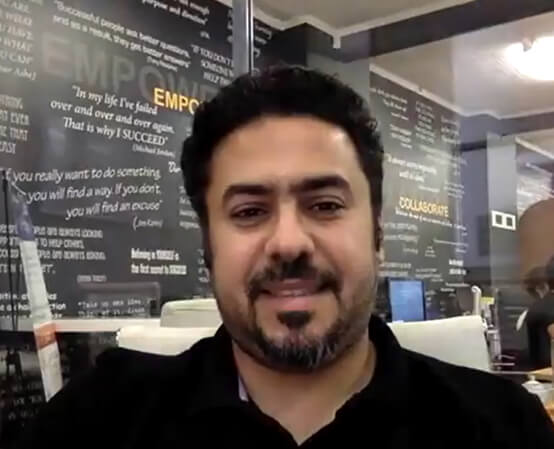
"They feel like our team — not a vendor."

RH
Ismail Abualsmah
CEO, Trieval
01:18
Repeat client
Although regulations prevented the site's launch, it met all requirements in terms of form and function. Fullestop's project plan charted a clear course to completion. The team's flexible, diverse talent pool enabled them to manage each stage of the project with consistent levels of skill.
Fast turnaround
Weekly demos, no surprises, and they push back when we're wrong. That last part is rare. Cut our cloud bill 47% in the first audit.

News & insights

Check Out the Latest Trends and Tech Discussions

We constantly come up with top-tier resources and breathtaking ideas that would help you stay informed about
the latest happenings in the tech world.

mHealth Applications: Transforming Healthcare Inno...

The market for software solutions for healthcare was valued at $11.5 billion in 2014 and is predicted to hit an astonishing $316.8 billion before 2027...

Read More Arrow

A Comprehensive Guide to Telemedicine App Developm...

The global COVID-19 epidemic has accelerated and transformed the functioning of the healthcare sector. It has demonstrated that our healthcare system ...

Read More Arrow

Estimating App Development Costs in 2026: A Transp...

Estimating the mobile app development cost has always been akin to asking, "How long is a piece of string?" But as we step into 2026, the answer is be...

Read More Arrow

How Much Does it Costs to Develop an App Like Spot...

There are no more radios, walkmans, and iPods where we would sit for hours looking through music, selecting the songs we liked, then downloading them ...

Read More Arrow

How Much Does It Cost to Hire a Mobile App Develop...

In today's digital-first world, a mobile app can be a game-changer for businesses and individuals alike. From streamlining operations to reaching a wi...

Read More Arrow

How to Build a Profitable Real Estate Mobile App i...

According to NAR, the older generation prefers desktops to search for homes, while Millennials spend most of their time using mobile. An app for real ...

Read More Arrow
Frequently Asked Questions

The questions every founder asks us.

  1. An MVP is the version of a new product that allows a team to collect the maximum amount of validated learning about customers with the least amount of effort. It contains only the core features essential to solve the primary user problem and is ready to be launched to early adopters. It is not a fully featured product but a functional, marketable product designed for testing the core hypothesis.

  2. The primary goal is to validate the product idea and its market demand before committing significant resources to full-scale development. An MVP minimizes risk, accelerates time-to-market, and provides critical real-world user feedback. This feedback informs subsequent iterations, ensuring the final product achieves strong product-market fit.

  3. Most MVP development follows an iterative, four-stage lifecycle:

    • Discovery & Ideation: Defining the target audience, conducting market research, prioritizing features, and creating a detailed roadmap.
    • Design & Development: Building wireframes, designing the user experience (UX/UI), coding the core features using an appropriate tech stack (like React, Node.js, or Flutter), and rigorous quality assurance (QA).
    • Launch & Testing: Deploying the product to a limited user base (early adopters) and collecting quantitative and qualitative data on usage and feedback.
    • Iteration & Scaling: Analyzing the data, deciding which features to build next (pivot or persevere), and planning the evolution toward a full-featured product.
  4. The timeline for an MVP usually ranges from 12 to 24 weeks (3 to 6 months). This duration is heavily influenced by factors such as:

    • Complexity of Core Features: A mobile application with complex integrations will take longer than a simple web-based platform.
    • Technology Stack: Choosing a familiar and efficient tech stack can speed up development.
    • Scope Definition (Feature Creep): A well-defined scope from the start is crucial; avoiding the temptation to add non-essential features (feature creep) keeps the timeline short.
  5. MVP development costs vary widely, but they are determined by three main factors: scope complexity, the size and location of the development team, and the chosen engagement model.

    • Scope: This is the biggest factor; more features mean more work and higher cost.
    • Engagement Models: Agencies typically offer Fixed-Price (best for small, well-defined MVPs) or Time & Material (T&M) (best for iterative, flexible projects).
    • Consultation: Most companies require a Discovery Phase or detailed consultation to provide an accurate, project-specific cost estimate.
  6. The Discovery Phase is a mandatory preliminary step that occurs before any coding begins. It is essential because it validates the business idea, confirms market viability, refines the value proposition, and translates abstract concepts into concrete technical requirements. The deliverables typically include a detailed Feature Roadmap, a Technical Architecture blueprint, user stories, wireframes, and a precise cost and timeline estimate.

  7. While both are early-stage concepts, their purpose differs:

    • A Prototype is a non-functional or semi-functional simulation used primarily for internal testing of design or flow. It is used to quickly test how a feature works and looks.
    • An MVP is a fully functional, live, and marketable product with core features. It is launched to real customers to test whether the market wants the product and whether the business model is viable.
  8. Scalability is ensured by making strategic technical decisions during the architecture design phase. This includes:

    • Choosing modern, proven technology stacks (e.g., microservices, cloud-native solutions) that can handle increasing user loads.
    • Developing with clean code practices and a modular structure that allows for easy integration of new features.
    • Designing the database structure to accommodate future data growth and traffic spikes without requiring a costly overhaul later.
  9. After launch, the focus shifts to validated learning and iteration. The company will continuously track key performance indicators (KPIs) and collect user feedback. The post-launch strategy involves:

    • Data Analysis: Using analytics tools to see which features are used most/least.
    • Bug Fixing & Performance Optimization: Addressing issues reported by early adopters.
    • Iteration: Using the data to decide on the next set of features to build for the V2 version, effectively transforming the MVP into a more robust product.
  10. Reputable development partners prioritize client security and ownership. Intellectual property (source code, designs, and materials) is typically 100% owned by the client upon final payment. This is legally secured through a Non-Disclosure Agreement (NDA) signed at the beginning of the engagement and specific clauses within the Master Services Agreement (MSA) that confirm the transfer of all IP rights.

Pick your starting line

Three ways to get your MVP launched.

Weekend prototype or a seed-funded build we have a low-risk first step for every stage.